












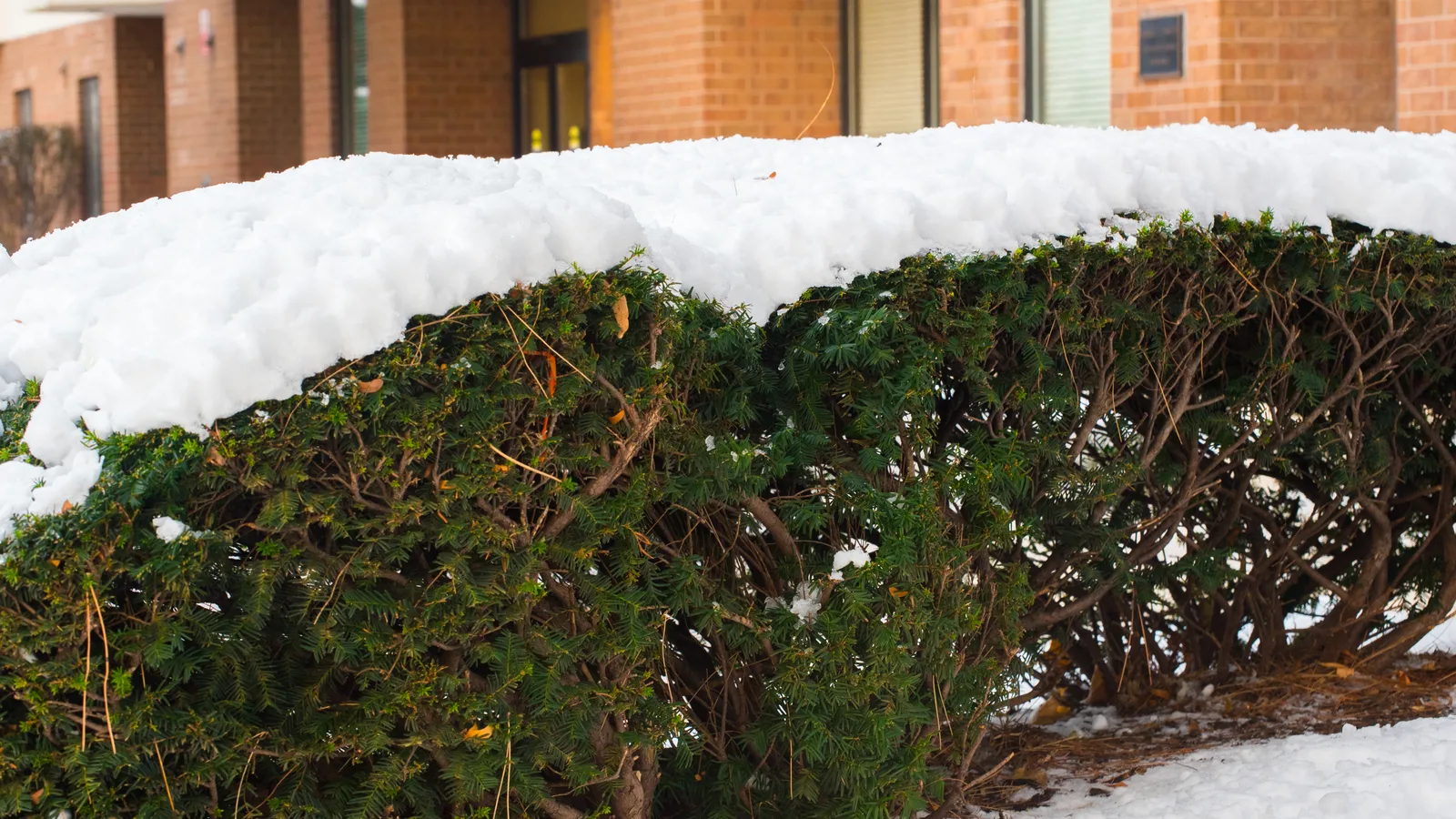
The brown, dried-out side of an evergreen hedge in spring and the dead strip of lawn along a driveway often trace back to winter salt. The University of Minnesota Extension's guide to deicing salts and landscapes explains how the damage happens and how much salt a walk actually needs.
Two ways salt hurts plants
According to the extension guide, salt reaches plants by two routes. Spray thrown up from walks and roads lands on foliage and can burn turf and leaves, and evergreens are especially exposed. Salt that soaks into the soil is taken up by roots, which dehydrates the plant. Sodium also causes clay soil to swell and compact, so water soaks in more slowly and roots have a harder time growing.
The symptoms it lists are dried, brown needles and leaves, loss of foliage, buds and branches, and in bad cases an early death. The extension names sodium chloride, ordinary rock salt, as the deicer that does the most damage to plants.
Step 1: Shovel first
The guide says not to put deicer on top of snow. Clear the snow first and treat only the ice that is left. When piling the shoveled snow, keep it off shrubs, since it can carry salt and its weight can snap branches.
Step 2: Measure the salt
Minnesota Extension's rate is about one 12-ounce coffee mug of salt for roughly 1,000 square feet, which it describes as about a 20-foot driveway or 10 sidewalk squares. Spread it evenly with about 3 inches between grains.
Step 3: Read the temperature on the bag
Different deicers work at different temperatures, and the guide says to read the label and apply each product only in the range it is made for. The products it names are sodium chloride, magnesium chloride, calcium chloride, calcium magnesium acetate and urea, plus additives such as beet juice and corn molasses. Depending on the formulation, deicers lower the freezing point of water to anywhere from 20 degrees down to minus 30 degrees Fahrenheit.
Step 4: Sweep up what is left
Once the pavement is dry, sweep up the leftover salt and save it for the next storm. The extension notes that one teaspoon of salt can pollute 5 gallons of water, which is the other cost of salt that washes off a driveway into a storm drain.
What about sand and the alternatives
The guide is direct about the tradeoffs. Sand adds traction but melts nothing and can clog drains. Beet brine lets salt work at lower temperatures and cuts the environmental load, but its sugars can draw down oxygen in nearby water. Alfalfa meal gives traction and melts some ice, but its nitrogen can wash into waterways.
Planting so it matters less
For the longer term, the extension recommends keeping trees and shrubs at least 3 feet from driveways and walks that get deicer, and at least 7 feet from roads where plows throw salt spray. It advises against planting evergreens along salted surfaces at all, and suggests perennials that die back each winter, or annuals, for the strip right beside a walk.
For lawns along a salted edge, the guide ranks slender and strong creeping red fescues as the best turf grasses in salty soil, fine fescues in general as strong performers, tall fescue as middling and Kentucky bluegrass as poor. It also points to MNST-12, a salt-tolerant seed mix approved in Minnesota and sold as seed and sod.
Loading comments…