












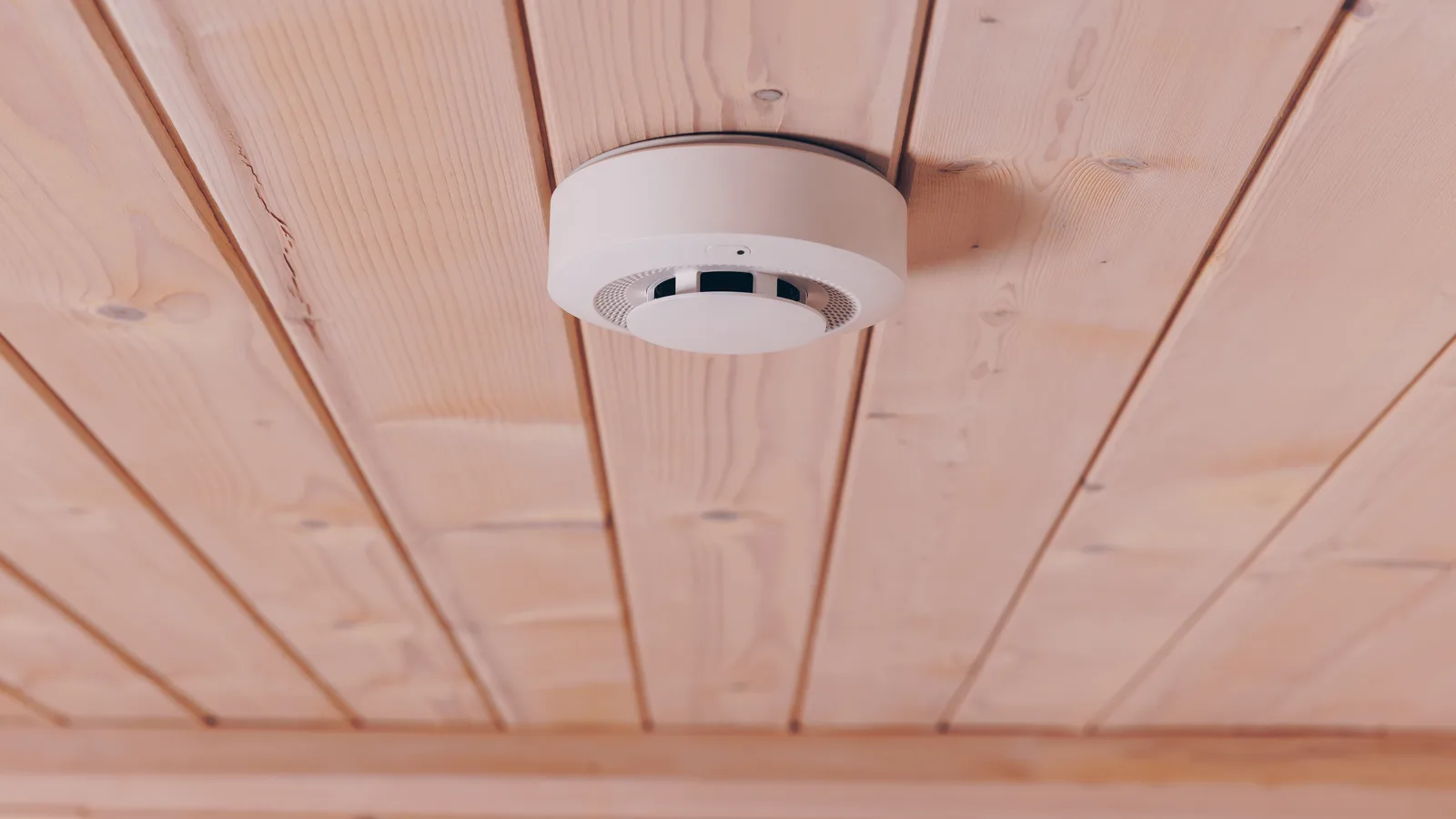
A smoke alarm is one of the few devices in a house that is supposed to be replaced on a schedule whether or not it seems to work. The U.S. Fire Administration, part of FEMA, says every alarm should be replaced 10 years after the date it was manufactured, and tested once a month in the meantime. With a week of holiday cooking and houseguests ahead, this is a short job to do now.
The reason for urgency is in the USFA's own guidance: when an alarm sounds, you may have less than two minutes to get everyone out. An alarm with a dead or missing battery is the same as having no alarm.
Step 1: find the date
Take each alarm down by twisting it off its base, and look for the manufacture date, usually printed on the back. If it is more than 10 years old, or you cannot find a date at all, replace it.
Step 2: test it
Press and hold the test button until the alarm sounds. The USFA says to do this monthly for every type: alarms with replaceable 9-volt batteries, alarms with sealed 10-year lithium batteries, and hardwired alarms.
Step 3: batteries
The battery schedule depends on the type, per the USFA:
- Alarms with a 9-volt battery: replace the battery at least once a year, and the alarm every 10 years.
- Hardwired alarms: they usually have a backup battery, which needs replacing at least once a year. Replace the alarm every 10 years.
- Alarms with a sealed 10-year lithium battery: there is no battery to change. Replace the whole alarm as the manufacturer directs.
Step 4: check the placement
The USFA says alarms belong inside every bedroom, outside each separate sleeping area, and on every level of the home, basement included, mounted on the ceiling or high on the wall according to the manufacturer's instructions. It recommends interconnected alarms, so that when one sounds they all do, which matters most in a two-story house where a fire downstairs may not be heard upstairs.
An alarm close to the kitchen will go off from cooking. The USFA's advice is never to pull the battery: open a window or door, press the hush button or wave a towel at it, or move the alarm several feet farther from the kitchen or bathroom.
Choosing replacements
There are two kinds of sensor. Ionization alarms and photoelectric alarms respond differently to different kinds of fire, and the USFA recommends having both in the home, or using dual-sensor alarms that contain both. Its price guide puts basic ionization or photoelectric alarms at $6 and up, dual-sensor alarms at $24 and up, and wireless interconnected alarms at $40 and up. Alarms with strobe lights or bed shakers are made for people who are deaf or hard of hearing.
Battery-powered alarms are a homeowner job. The USFA says hardwired alarms should be installed only by a qualified electrician, and replacing a hardwired unit means matching the connector or rewiring the base.
Electrical, gas, roof and ladder work can cause serious injury. Shut off power or gas first, follow the manufacturer's instructions and local code, and hire a licensed pro for anything beyond your experience.
Loading comments…