












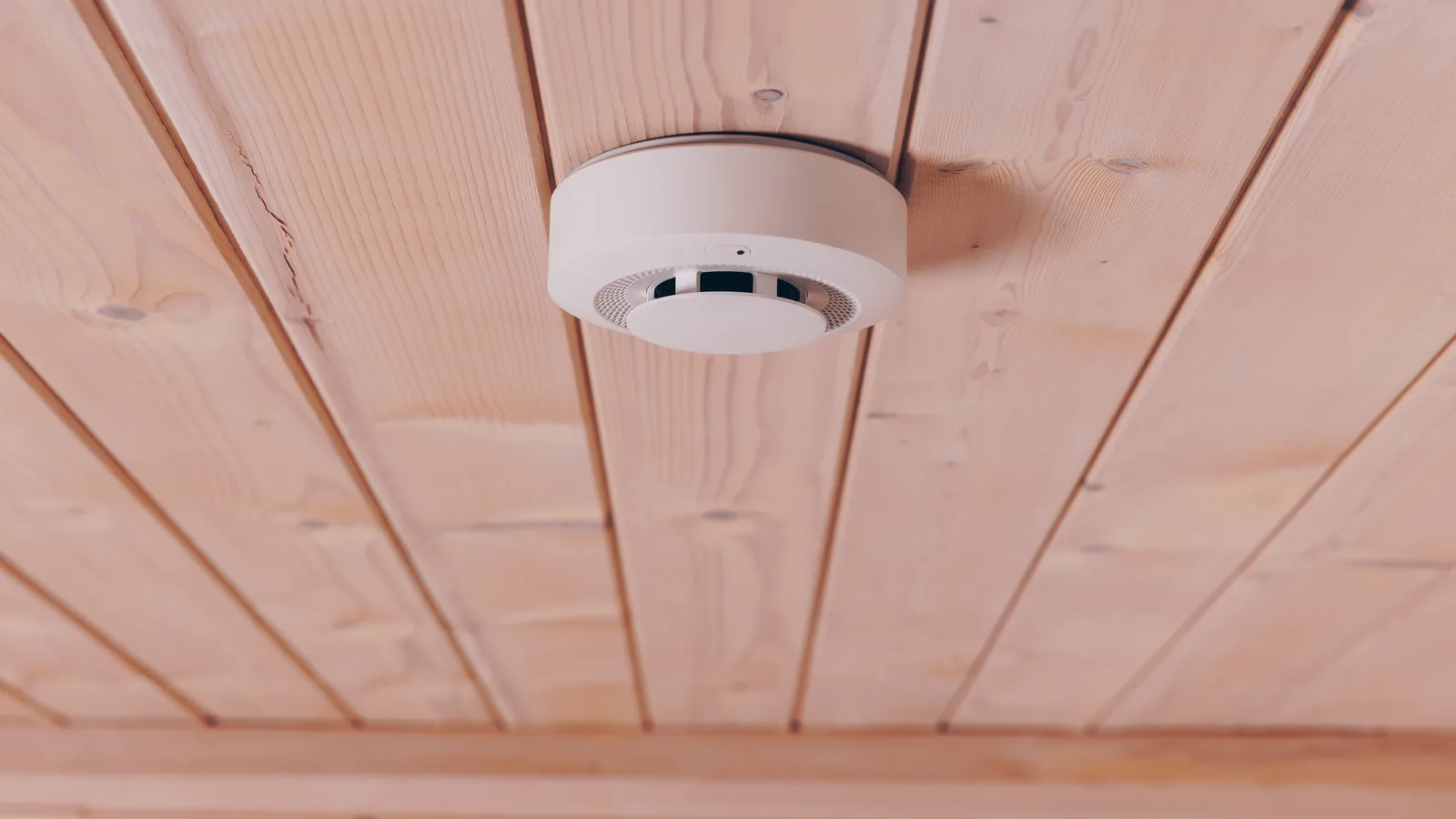
The Consumer Product Safety Commission is telling owners of two combination smoke and carbon monoxide alarms to stop using them and throw them away, because the alarms can stay silent when there is smoke and fire in the room. Neither seller has agreed to a recall, so there is no refund or replacement program. The agency issued both warnings on October 29, 2026.
The two alarms
Model JZA-540COM, sold under the JuzhiAnn, Yfwsrecinoe and JAEHSKA brand names. About 51,825 were sold on Amazon and eBay from November 2023 through October 2026, alone or in multipacks, for roughly $11 to $107. The CPSC says it has seven reports of these alarms failing to alert in the presence of smoke or fire. The seller, Shenzhen Laijinhe Trading Co., Ltd., which does business as Yfwsrecinoe US, has not responded to the agency's request for a recall.
Model YHW-542COM-R, sold as the GuardianSense/KLTseanife Combination Smoke and Carbon Monoxide Alarm, on Amazon and eBay from September 2025 through June 2026, in single and multipacks for $18 to $168. The CPSC has two reports of these failing to alert. The manufacturer, ShenZhen YuFangWeiShi Technology Co., and the seller, Shenzhen Lixiang Xiancai Co., have not responded to the agency's recall request.
Both are white plastic units with a digital display. The model number and the manufacturer are printed on the back of the alarm, which is the quickest way to check one already on a ceiling.
What a warning means, and how it differs from a recall
A recall is announced jointly by the CPSC and the company and comes with a remedy: a refund, a repair or a replacement. When a company will not take part, the agency can issue a unilateral safety warning instead, which is what happened here. The CPSC asks owners not to sell or give the alarms away, and federal law already bars selling products under a recall. Owners can report a failure or other incident at SaferProducts.gov or call the CPSC hotline at 800-638-2772.
Checking a replacement
The CPSC's guidance in both warnings is to buy smoke alarms that meet UL 217, the safety standard for smoke alarms, and carbon monoxide alarms that meet UL 2034, the standard for CO alarms. A combination unit should list both. Look for the certification mark of a recognized testing laboratory on the alarm and its packaging, not only in a product listing's text.
The agency's placement advice is the same as for any alarm: a smoke alarm and a CO alarm on every level of the home, and outside each separate sleeping area, using battery-powered units or hardwired units with battery backup. Test alarms regularly and replace batteries as needed. The National Fire Protection Association adds that smoke alarms should be replaced when they are 10 years old, and that interconnected alarms, which all sound when one does, give more warning in a larger home.
Hardwired alarms connect to a home's electrical circuit; replacing one with a different brand often means changing the wiring harness, which is work for an electrician if it is unfamiliar.
Electrical, gas, roof and ladder work can cause serious injury. Shut off power or gas first, follow the manufacturer's instructions and local code, and hire a licensed pro for anything beyond your experience.
Sources
- U.S. Consumer Product Safety Commission: Warning on JuzhiAnn, Yfwsrecinoe and JAEHSKA smoke and CO alarms, model JZA-540COM
- U.S. Consumer Product Safety Commission: Warning on GuardianSense/KLTseanife smoke and CO alarms, model YHW-542COM-R
- National Fire Protection Association: Smoke alarms
- U.S. Consumer Product Safety Commission: SaferProducts.gov
Loading comments…