












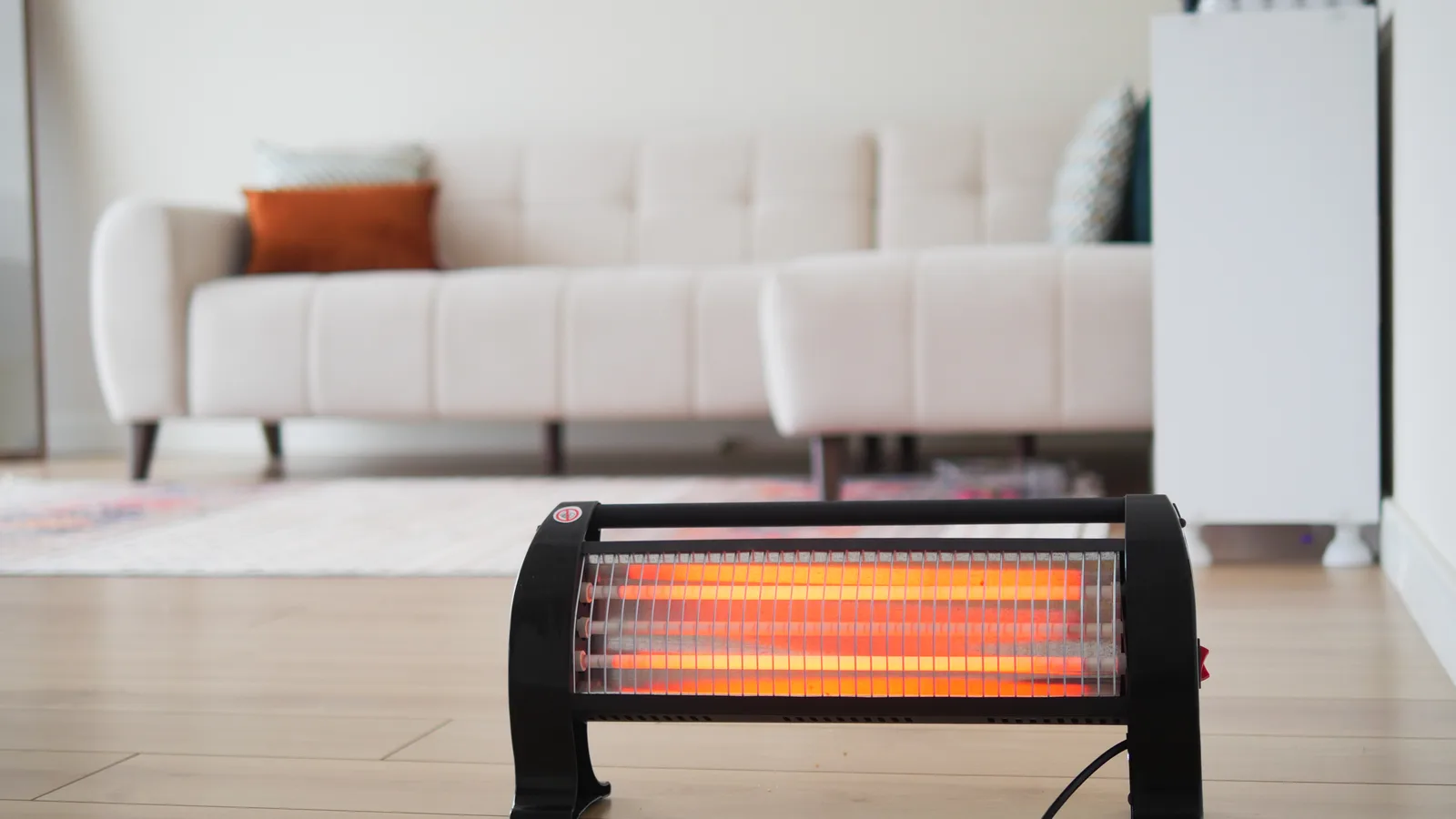
The first cold week of the season is when portable heaters come out of closets and garages, and it is also when the National Fire Protection Association's warnings about them become relevant. The NFPA, the organization behind the National Electrical Code and the fire codes most communities adopt, publishes a short checklist for portable electric space heaters. Each step below comes from that checklist, with the reason it exists.
Step 1: Check the heater before it goes on the floor
The NFPA's first item is a heater that carries the mark of a qualified testing laboratory, such as UL or Intertek's ETL, which shows the model was tested to a safety standard. It also recommends a heater with a thermostat and overheat protection, and with an automatic shutoff that turns it off if it tips over. A heater pulled from storage should be looked over for a frayed or cracked cord, a damaged plug or a cracked housing; a damaged heater does not go back into service.
Step 2: Pick the spot
- Three feet of clearance on every side. The NFPA's rule is to keep the heater at least 3 feet from anything that can burn, and it lists people among those things. Curtains, bedding, sofas, paper and clothing on a drying rack are the usual problems. The same 3-foot rule applies to furnaces, fireplaces and wood stoves.
- A solid, flat surface. A heater set on a rug, a bed or an uneven floor can tip or be smothered.
- Out of the traffic path. The NFPA says to keep heaters out of the way of foot traffic and never to block an exit. A heater beside a bedroom door is in the way of the route out during a fire.
- Away from children and pets. The NFPA recommends a kid-free zone around heaters.
Step 3: Plug it straight into the wall
The NFPA's instruction is to plug the heater directly into a wall outlet and never use an extension cord. Space heaters draw a large current for hours, and an extension cord or power strip that is not rated for that load can overheat. The plug should fit snugly; a loose outlet, or a plug or outlet that feels hot, is a sign to stop using that outlet and have it checked by an electrician.
Step 4: Decide when it runs
The NFPA says space heaters should be turned off and unplugged when leaving the room or going to bed. A heater is for the room someone is in, not for keeping a room warm while it is empty or overnight.
Step 5: Back it up with alarms
A working smoke alarm on every level and outside sleeping areas is the NFPA's standing advice for every home, with alarms tested monthly. A home that burns fuel for heat also needs carbon monoxide alarms. Electric space heaters do not produce carbon monoxide, but fuel-burning heaters, furnaces and fireplaces do.
Why the checklist leans on electric models
Electric heaters are not the risk-free option they can seem. The NFPA's tip sheet notes that two in five deaths in space heater fires involve portable electric heaters, which is why its checklist is written for them specifically. The types it describes, oil- or water-filled radiators, fan-forced heaters, ceramic heaters and infrared heaters, all fall under the same clearance and outlet rules.
Electrical, gas, roof and ladder work can cause serious injury. Shut off power or gas first, follow the manufacturer's instructions and local code, and hire a licensed pro for anything beyond your experience.
Loading comments…