












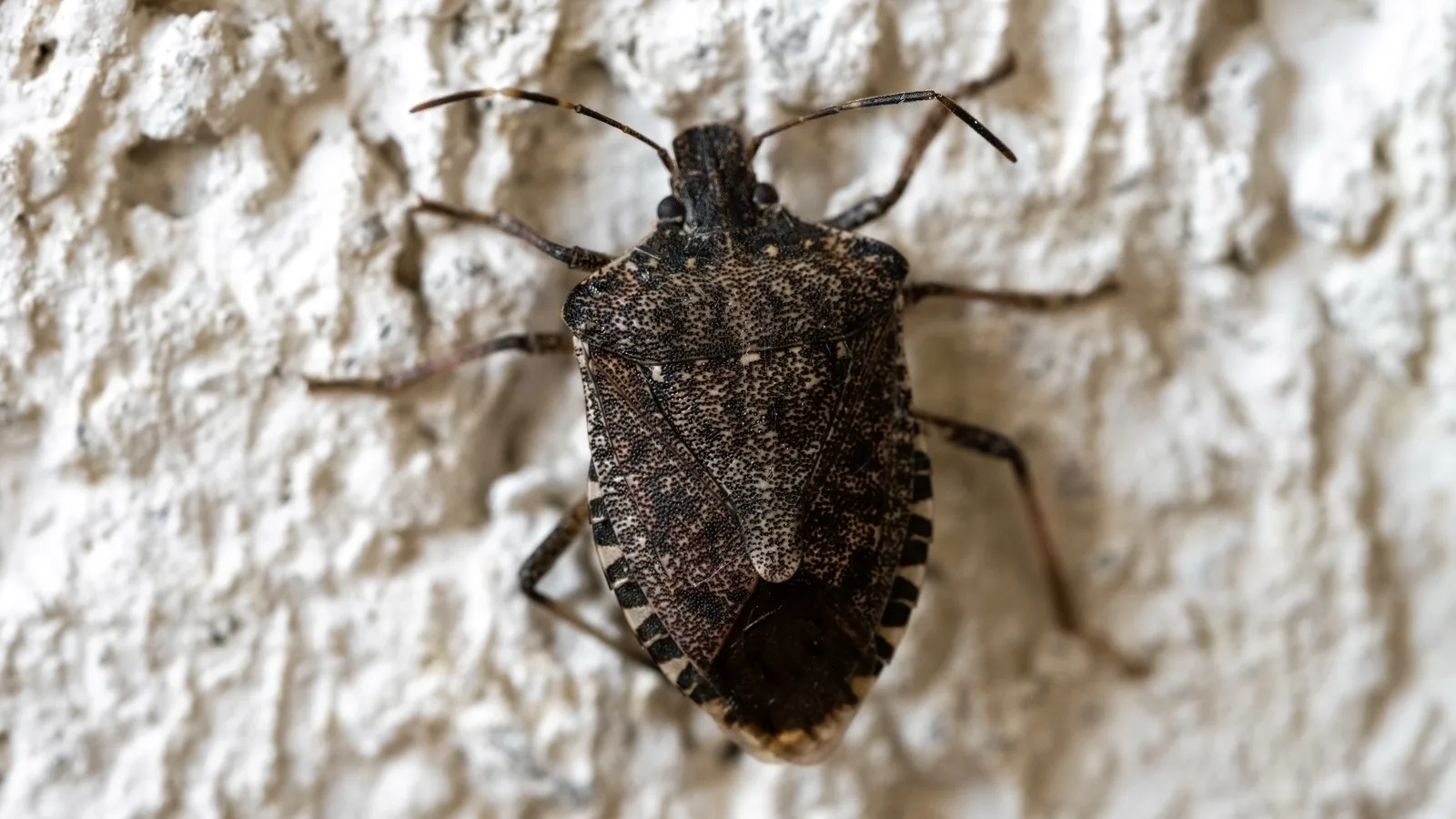
A warm afternoon in November or a sunny window in January can bring brown marmorated stink bugs out of hiding, one or two at a time, crawling across a ceiling or buzzing around a lamp. They are not breeding in the house. They moved in during the fall and are waiting out the cold, according to Penn State Extension, which has studied the insect since it first turned up in the United States.
Where they came from and why they come in
The brown marmorated stink bug is native to East Asia (China, Japan and Korea). It was first collected in the U.S. in Allentown, Pennsylvania, in 1998, though it probably arrived a few years earlier, and it has since spread across much of the country. It feeds on fruit, vegetables and ornamental plants outdoors.
From September through October, adults look for a sheltered place to spend the winter. They gather on the sunny sides of houses on warm fall days and work their way in through cracks: under and behind baseboards, around window and door trim, around ceiling light fixtures and exhaust fans, and through gaps in siding, at utility pipes and around chimneys. Once inside, most settle into wall voids and attics. Heat from the house on a mild day wakes some of them up, and they wander into living space, which is why sightings peak on warm days through winter and again in early spring.
What they do, and do not do, indoors
Penn State Extension says the bugs do not reproduce inside a house and do not damage the structure. The problem is the smell. When disturbed or crushed, they release defensive chemicals from glands on the body, and the odor lingers. For people sensitive to it, the extension notes, the odor can cause a runny nose or irritated eyes, and crushing a bug on bare skin can cause a skin reaction in a small share of people.
What works now
- Vacuum them up. A vacuum removes live and dead bugs from rooms. The vacuum can hold the smell for a while, so a shop vacuum or a dedicated bag works better than the household machine.
- Find where they come out and seal it. A bug that keeps appearing near the same light fixture or window casing is using a gap there. Caulking that gap from the inside stops it.
What the extension says not to do
Once stink bugs are inside walls or the attic, Penn State Extension advises against insecticides. Dust applied in a wall void can kill hundreds, but the dead bugs then feed carpet beetles, which go on to attack wool, stored dry foods and other natural materials. Aerosol foggers kill the bugs on walls and ceilings, but more come out after the room is aired, so they are not a fix. Spraying cracks and crevices indoors does not stop bugs from emerging and is not recommended.
The fix for next fall
Exclusion is the method the extension rates most effective, and it is done before the bugs gather in September. Seal cracks around windows, doors, siding, utility pipes, chimneys and under wood fascia with a good-quality silicone or silicone-latex caulk, and repair or replace damaged window and door screens. Where sealing everything is not practical, a licensed pest control operator can treat the outside of the house in early fall just before the bugs congregate, but sunlight breaks the insecticide down, so it may only work for several days to a week.
Any pesticide use follows its label directions, with products stored out of reach of children and pets.
Loading comments…