












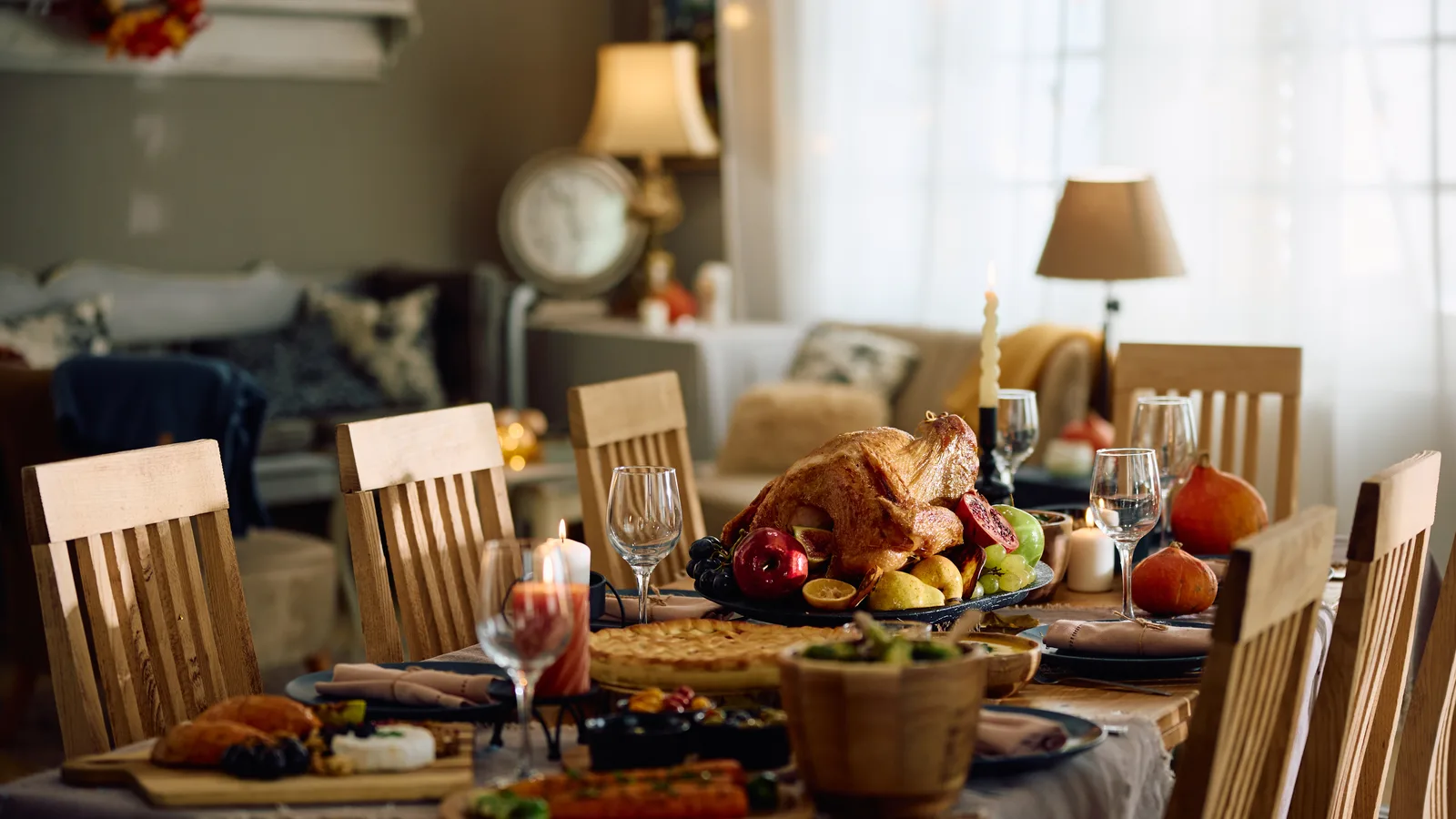
A Thanksgiving table set up as a buffet has a problem a plated dinner does not: the food sits out while people arrive, serve themselves, talk and come back for more. The Food and Drug Administration (FDA) and the Department of Agriculture's Food Safety and Inspection Service (FSIS) both publish guidance for exactly that arrangement, and nearly all of it is about equipment, layout and a clock, not about cooking. With Thanksgiving falling on Thursday, Nov. 26, this is the week the serving pieces come out of the cabinet.
Two temperatures and the range between them
Bacteria grow rapidly between 40 and 140 degrees Fahrenheit, FSIS says. The agencies' holding rules follow from that range. Hot food is kept at an internal temperature of 140 degrees or warmer, and cold food at 40 degrees or colder. Anything perishable sitting at room temperature is in the range, and the two-hour clock described below is running on it.
Check what the warmer can do
Both agencies name the same three pieces of equipment for the hot side of the table: chafing dishes, slow cookers and warming trays. The FDA adds a caution that is easy to miss. Some warmers hold food at only 110 to 120 degrees, it says, so the product label should be checked to confirm that the unit can hold food at 140 degrees or above.
The check that settles it is a food thermometer in the dish. The FDA's instruction is to measure the food, not to trust the dial. A warming tray that cannot reach 140 degrees is a serving surface, and whatever sits on it is on the two-hour clock like everything else.
Cold dishes go on ice
Cold food stays in the refrigerator until serving time, the FDA says. If it is going to be on the table for longer than two hours, the plates go on ice. FSIS describes the setup as nesting dishes in bowls of ice, or else using small serving trays and replacing them often. A second, larger bowl or a rimmed tray under each cold dish is the piece of equipment to find before the day.
Small platters, swapped whole
The FDA's central advice on layout is to keep serving portions small. A host who is not sure how fast the food will go can prepare several small platters and dishes ahead, hold the backups, and bring out a fresh one as each empties. Cold backups wait in the refrigerator. Hot backups wait in an oven set at 200 to 250 degrees.
The swap matters as much as the size. The agency says not to add new food to a serving dish that already has food in it, and to replace a nearly empty dish with a freshly filled one. Its reasoning is that guests' hands can carry bacteria to the food during a party and that bacteria multiply at room temperature, so topping up a dish puts fresh food in with food that has been sitting out.
For a host, that is an argument for counting serving dishes this week. Two smaller bowls for each side dish do the job that one large bowl cannot.
The two-hour rule
Perishable food left at room temperature for more than two hours is to be discarded, unless it has been kept hot or cold the whole time, the FDA says. FSIS states the same limit. Where the temperature is above 90 degrees, both agencies cut the limit to one hour, a condition more likely on a patio in the South than in a dining room in November.
The clock is easier to keep if someone writes down when each dish came out. A long afternoon of grazing is the situation the rule was written for.
Clearing the table
FSIS says leftovers must be refrigerated within two hours of cooking or of being taken off the appliance that was keeping them warm. To cool quickly, large amounts are divided into shallow containers, and a turkey is cut into smaller pieces first, with the breast meat sliced; legs and wings can stay whole. Hot food can go straight into the refrigerator, the agency says.
The same clock applies to food that leaves with guests. The FDA says leftovers sent home should be refrigerated as soon as the guests arrive, and within two hours. Containers with lids, set out before the meal, make that possible.
Refrigerated leftovers keep for three to four days, FSIS says, and frozen ones for three to four months at best quality. Reheated leftovers should reach 165 degrees on a food thermometer, and sauces, soups and gravies should be brought to a rolling boil.
What to have on hand by Wednesday
- A food thermometer, for checking that hot dishes are holding at 140 degrees.
- Warmers whose labels say they hold at 140 degrees or above.
- Extra small serving dishes, so each one can be swapped instead of refilled.
- Bowls or trays deep enough to hold ice under the cold dishes.
- Shallow lidded containers for leftovers and for guests.
Questions about a specific dish go to the USDA Meat and Poultry Hotline at 1-888-674-6854, the number FSIS lists on its food safety pages.
Loading comments…