












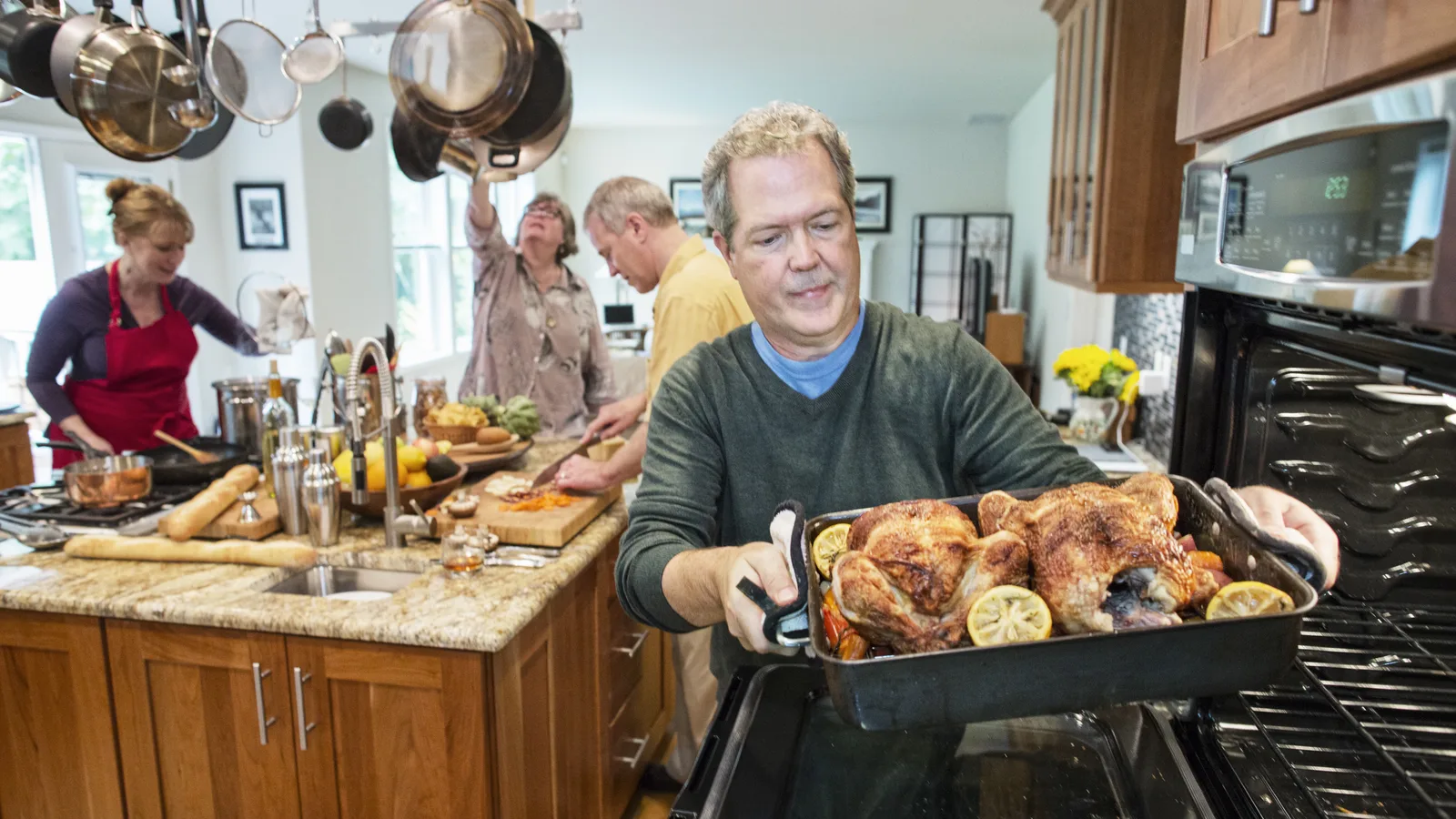
Thanksgiving is the single busiest day of the year for home cooking fires in the United States. The National Fire Protection Association estimates that fire departments responded to 1,139 home cooking fires on Thanksgiving Day 2024, which is 321 percent of the average day. Christmas Day and Christmas Eve came next, each at nearly twice the daily average.
With the oven, the stovetop and every countertop appliance running at once tomorrow, and a house full of people moving through the kitchen, here is what NFPA's figures show and the specific steps it gives for keeping the meal from becoming one of those calls.
What the numbers count
The figures come from NFPA Research and are estimates of fires reported to U.S. fire departments, so a pan fire put out with a lid and never reported is not in them. For structure fires on Thanksgiving across 2020 through 2024, NFPA attributes 80 percent to cooking, and those cooking fires account for 35 percent of the civilian injuries in Thanksgiving structure fires. NFPA reports no civilian deaths in Thanksgiving cooking fires in those five years.
Across the whole year, cooking causes about half (51 percent) of reported home fires, 35 percent of home fire injuries and 16 percent of home fire deaths, according to the same research.
The leading cause is the empty kitchen
NFPA names unattended cooking as by far the leading factor in cooking fires and in cooking fire deaths. Its first two rules follow from that: stay in the kitchen whenever something is on the stovetop, and stay in the house while the turkey roasts, checking on it often.
One practical way to apply it in a full house is to name one person as the stovetop watcher for each stretch of the afternoon, so a pot is never left on the assumption that someone else is in the room.
Setting up the kitchen for a crowd
NFPA's tip sheet is written for a house with children and guests in it:
- Keep children at least 3 feet from the stove. NFPA uses the same 3-foot safety zone around fireplaces, space heaters and anywhere hot food or drinks are set down.
- Keep kids away from hot food and liquids. Steam or splashes from vegetables, gravy or coffee can cause serious burns.
- Keep knives out of reach.
- Do not let the cords of an electric knife, coffee maker, plate warmer or mixer dangle off the counter where a child can pull them.
- Store matches and utility lighters up high, in a locked cabinet.
- Never leave children alone in a room with a lit candle.
- Keep the floor clear of toys, bags and purses so nobody trips while carrying something hot.
Test the smoke alarm tonight
NFPA's list ends with the smoke alarms: make sure they work by pressing the test button. Doing it the night before means a dead battery or an expired unit is found while there is still time to replace it.
The oil fryer question
NFPA's position on oil-based turkey fryers is that they are not safe, because they use large amounts of oil at high temperatures that can cause severe burns, and it strongly discourages their use. Its alternatives are buying a fried turkey from a grocery store or restaurant, or using a fryer that does not use oil.
Before the first burner goes on
The short version of NFPA's guidance for tomorrow: press the smoke alarm test button tonight, mark off 3 feet around the stove for children, put cords and lighters out of reach, and decide who is watching the stovetop at each point in the day. NFPA publishes its Thanksgiving and cooking safety tip sheets as free downloads on the pages listed below.
Loading comments…