












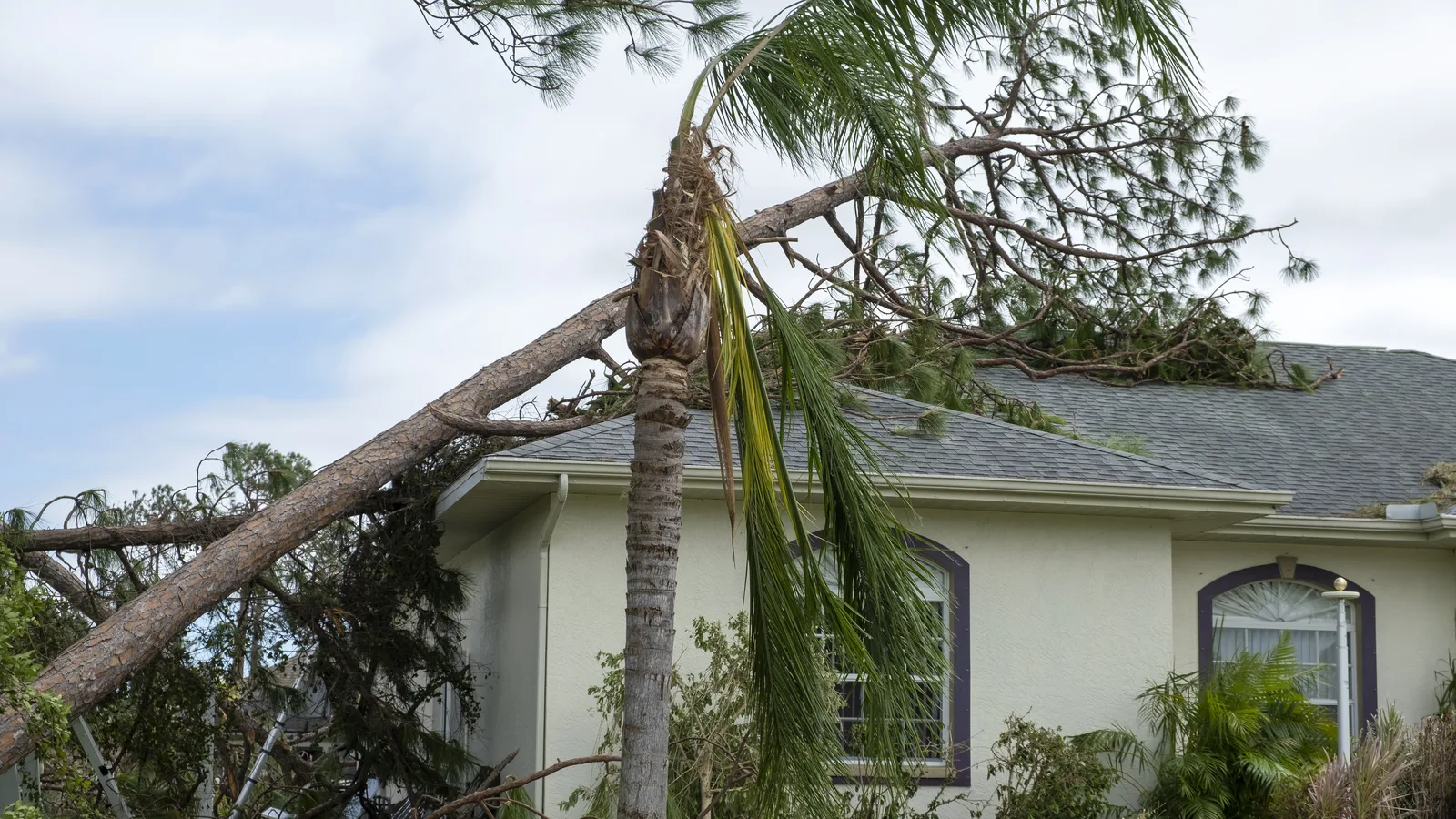
Winter wind, ice and wet snow bring down trees and limbs every year, and the question that follows is always the same: whose policy pays, and for what? The Insurance Information Institute, the industry's research and education group, explains how a standard homeowners policy treats a fallen tree. The answer depends less on whose tree it was than on what it hit.
When it hits the house or another insured structure
A standard homeowners policy covers damage to the house and its contents, and to other insured structures such as a detached garage, when a tree comes down in wind, lightning or hail, according to the institute. The claim goes to the homeowner's own insurer regardless of who owned the tree. Removing the tree from the structure is covered too, generally up to about $500 to $1,000, depending on the insurer and the policy. A large tree can cost more than that to take down and haul away, so the gap is the homeowner's.
When it hits nothing
A tree that falls across the yard without striking an insured structure is a different matter. The institute says homeowners policies generally do not pay to remove trees or landscaping debris in that case. Some insurers will pay to remove a fallen tree that blocks a driveway or a ramp designed to help a person with a disability get in and out.
When the tree is the loss
Trees, shrubs and plants on the property are themselves covered only for specific perils the institute lists: fire, lightning, explosion, theft, aircraft, vehicles not owned by the resident, and vandalism or malicious mischief. Wind is not on that list. Coverage for those losses is generally limited to 5 percent of the insured amount on the house, and most insurers also cap what they will pay per tree, shrub or plant. On a house insured for $400,000, that 5 percent works out to $20,000 in total, before the per-tree limit.
A neighbor's tree
If a neighbor's tree lands on the house, the homeowner still files with their own insurer. That insurer may then try to recover what it paid from the neighbor's insurer, a process called subrogation, and if it succeeds the homeowner may get the deductible back. After a windstorm or hurricane, the institute says insurers usually do not try to work out where a tree or its branches came from.
Maintenance is not covered
The institute is direct that poor maintenance is not covered by homeowners insurance. A dead or diseased tree that the owner knew about is the kind of thing an adjuster asks about, and it is the reason the institute recommends keeping trees healthy and preparing them for winter and storm season.
What to check before the next storm
Read the policy's debris removal and trees, shrubs and plants provisions for the actual dollar limits, which vary by insurer and policy form. After a tree falls, photograph the damage before anything is moved, keep receipts for emergency work such as tarping a roof, and call the insurer before hiring removal beyond what is needed to prevent further damage. Cutting a large tree off a roof is work for a professional crew, not a homeowner with a chainsaw on a ladder.
Electrical, gas, roof and ladder work can cause serious injury. Shut off power or gas first, follow the manufacturer's instructions and local code, and hire a licensed pro for anything beyond your experience.
This article reports rules, data and expert guidance. It is not legal, tax, insurance or financial advice. Talk to a licensed pro, your tax advisor or your insurer before you act on it.
Loading comments…