










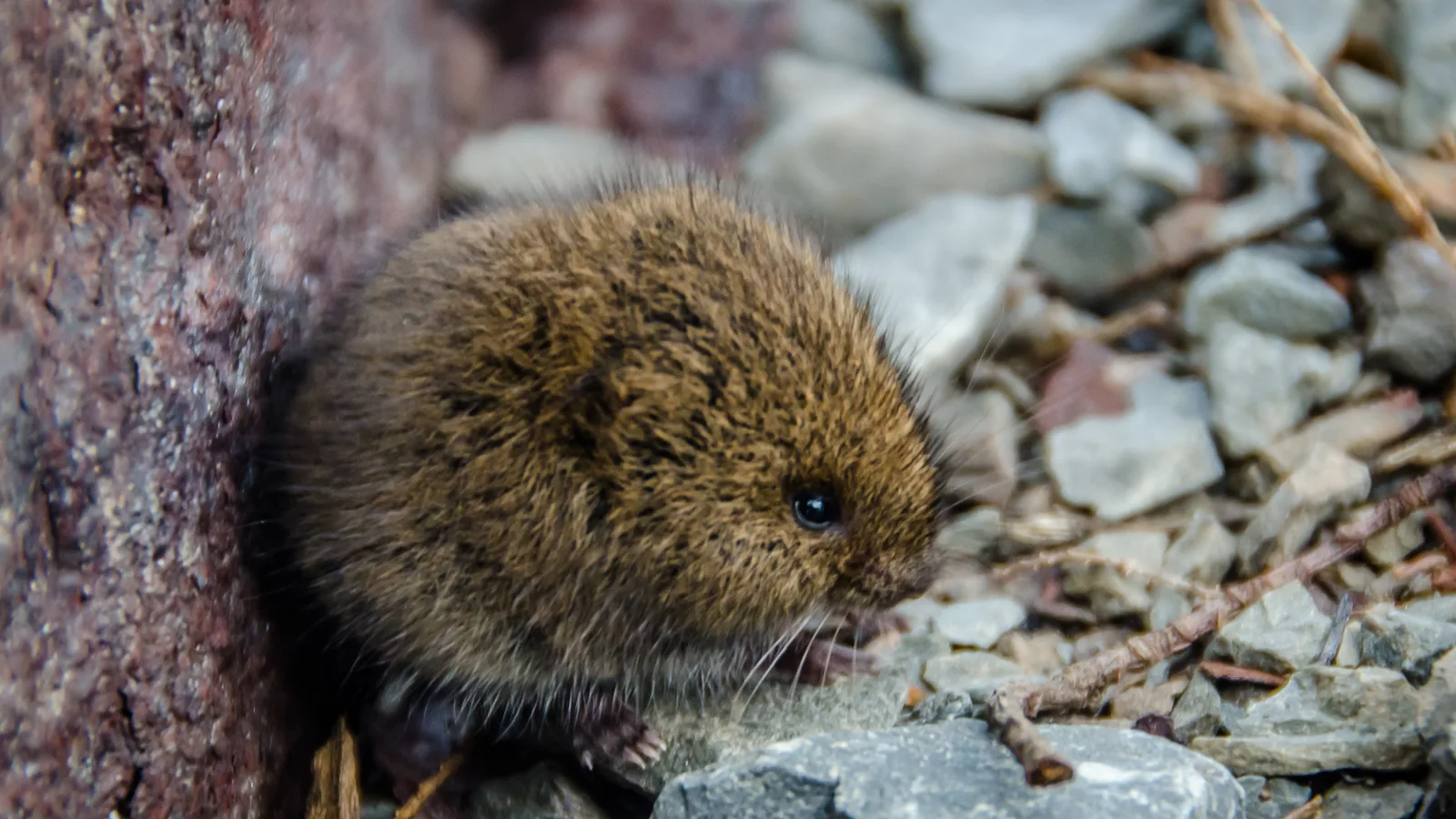
The trails that appear in a lawn when the snow melts in March, narrow paths of clipped and flattened grass, are usually the work of voles that spent the winter there. Under a snow cover the small rodents travel, feed and nest out of sight of hawks and foxes, and when grass runs short they turn to the bark of young trees and shrubs. The extension services agree on the timing: the protection has to be in place before the snow arrives.
Vole, mouse, mole or shrew
Penn State Extension describes adult voles as 5 to 7 inches long, with stocky bodies, short legs, short tails, blunt rounded snouts and visible eyes and ears. A mouse has a tail nearly half as long as its body. A mole has very large front feet, no external ears and tiny eyes, and eats insects and earthworms rather than plants. A shrew is smaller still, with a long pointed snout.
The meadow vole and the woodland, or pine, vole do most of the damage in the eastern United States. Meadow voles make surface runways about 1 1/2 inches wide; woodland voles stay underground and leave small cone-shaped piles of soil. Voles eat mainly grasses and other plants, and they eat bark mostly in fall and winter.
Why winter is when the trees suffer
University of Illinois Extension notes that a snow cover of about 3 inches or more lets voles tunnel from cover to the trunks of junipers, arborvitae and fruit trees without being seen. Penn State Extension says damage can reach as high as the snow line. Vole gnawing marks are small and irregular, about 1/8 inch wide and 3/8 inch long; rabbit damage is larger and cut cleanly at an angle. A trunk chewed all the way around, or girdled, is often discovered only in spring, and a girdled young tree may not survive.
Step 1: take away the cover
Penn State Extension recommends mowing regularly so ground cover stays at 3 to 6 inches, pulling mulch back at least 2 feet from tree trunks, and keeping a vegetation-free band at least 2 feet wide around each trunk, or a 3- to 4-inch layer of crushed stone or gravel instead. Illinois Extension adds that shoveling snow at least a foot back from a trunk after a storm removes the cover voles rely on.
Step 2: guard young trunks
The standard guard is a cylinder of 1/4-inch hardware cloth. Penn State Extension specifies 18 to 24 inches tall, buried 4 to 6 inches into the soil, and wide enough to allow for five years of trunk growth. In snowy regions the guard has to reach at least a few inches above the deepest expected snow. The University of California's Integrated Pest Management program advises bracing the guard so it cannot be pushed against the trunk, and checking it for gnawing or digging underneath through the winter.
Step 3: trap if numbers are high
Penn State Extension says fall and late winter are the easiest times to trap. Use mouse-size snap traps set at burrow openings or across a runway, at a right angle to it, baited with peanut butter and oatmeal or apple slices, and covered with an inverted box or pan. Check traps morning and evening and reset them until no more voles are caught.
What does not work well
Repellents based on thiram or capsaicin are registered for voles, but Penn State Extension says little data supports their effectiveness, and they wash off with rain and need reapplying. Frightening devices and fumigants are generally ineffective. Zinc phosphide and anticoagulant baits are restricted-use pesticides in Pennsylvania that may be applied only by a certified applicator; rules vary by state, so check with your own extension office.
What to expect in spring
Penn State and Illinois Extension both note that lawn runways usually recover as the grass grows in spring, with a light raking and, if needed, some reseeding. Damage to bark, bulbs and roots lasts longer, which is why the trunk guards matter most.
Loading comments…