












Replacing old toilets with models that carry the WaterSense label can save the average family more than $170 a year in water costs and about $3,400 over the life of the toilets, according to the Environmental Protection Agency, which runs the labeling program. The label also covers showerheads and bathroom sink faucets. Each has its own flow limit, its own performance tests and its own savings estimate, and the three are not equal.
Toilets: the largest share of indoor water
EPA says toilets account for nearly 30 percent of an average home's indoor water use. Older toilets can use as much as 6 gallons per flush. The current federal standard is 1.6 gallons, and a WaterSense labeled toilet uses 1.28 gallons or less, 20 percent under that standard.
The agency estimates that a family replacing old, inefficient toilets cuts the water its toilets use by 20 to 60 percent, close to 13,000 gallons a year. That is where the $170 comes from. The size of the saving depends on how old the toilets being replaced are: the estimate assumes inefficient ones, not toilets already at 1.6 gallons.
The label is also a performance test. EPA says the low-flow toilets of the 1990s were tied to double flushing, and that the program added criteria for clearing the bowl, cleaning its surface and carrying waste down the drain line. Those criteria have since been adopted into the national plumbing fixture standard. The tank-type toilet specification now in effect is Version 1.2, released June 2, 2014.
Showerheads: water and the energy to heat it
Showering is nearly 17 percent of residential indoor water use, by EPA's figures, close to 40 gallons a day for the average family. A standard showerhead flows at 2.5 gallons per minute. A labeled one may use no more than 2.0.
EPA estimates the average family saves 2,700 gallons a year with labeled showerheads. Because that is heated water, the agency adds an energy saving of more than 330 kilowatt-hours of electricity a year, which it describes as enough to power a house for 11 days. Labeled showerheads are tested for spray force, spray coverage and for holding a minimum flow across a range of household water pressures.
Bathroom faucets: the smallest saving and the cheapest fix
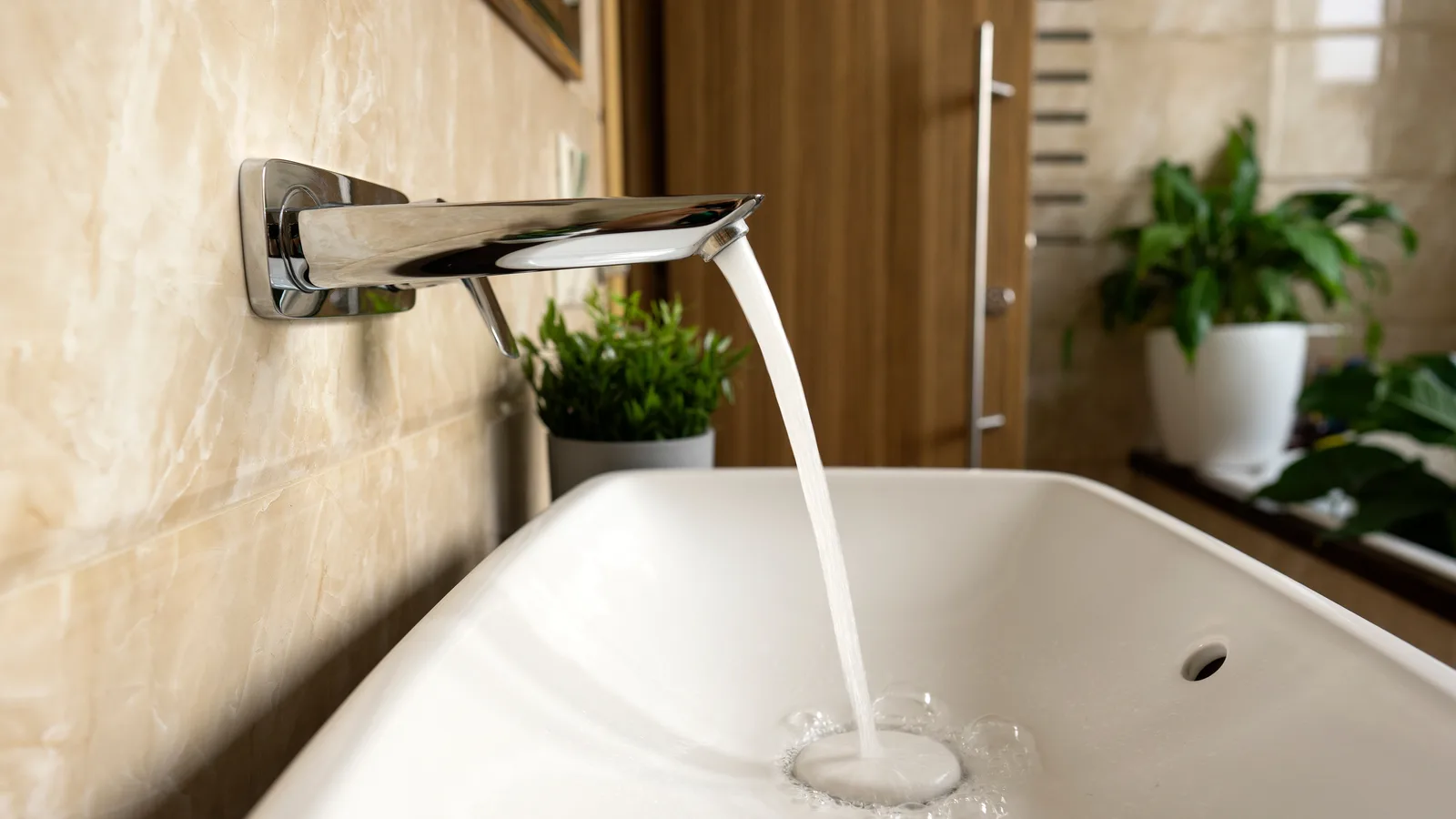
A labeled bathroom sink faucet or aerator flows at no more than 1.5 gallons per minute, against a standard 2.2. EPA puts the saving at about 700 gallons a year for the average family and nearly 11,000 gallons over the life of the faucets. The agency notes that an aerator, the screw-on tip of the spout, can cost as little as a few dollars and can be labeled on its own.
One limit matters when shopping: EPA labels private bathroom sink faucets and bar sink faucets only. There is no WaterSense label for kitchen faucets.
What the estimates do not include
All three figures are national averages for a family replacing older fixtures. Water and sewer rates differ by utility, so the dollar value of 13,000 gallons differs by address, and EPA publishes a per-family dollar figure on these pages for toilets only. The agency says many utilities offer rebates or vouchers on labeled products, which changes the purchase price but not the yearly saving.
Every labeled product is certified by an independent third party, not by its maker. The comparison a household can make is between those three limits, 1.28 gallons per flush, 2.0 gallons per minute and 1.5 gallons per minute, and the figures marked on its own fixtures. A local water utility's website lists any rebate.
Loading comments…