












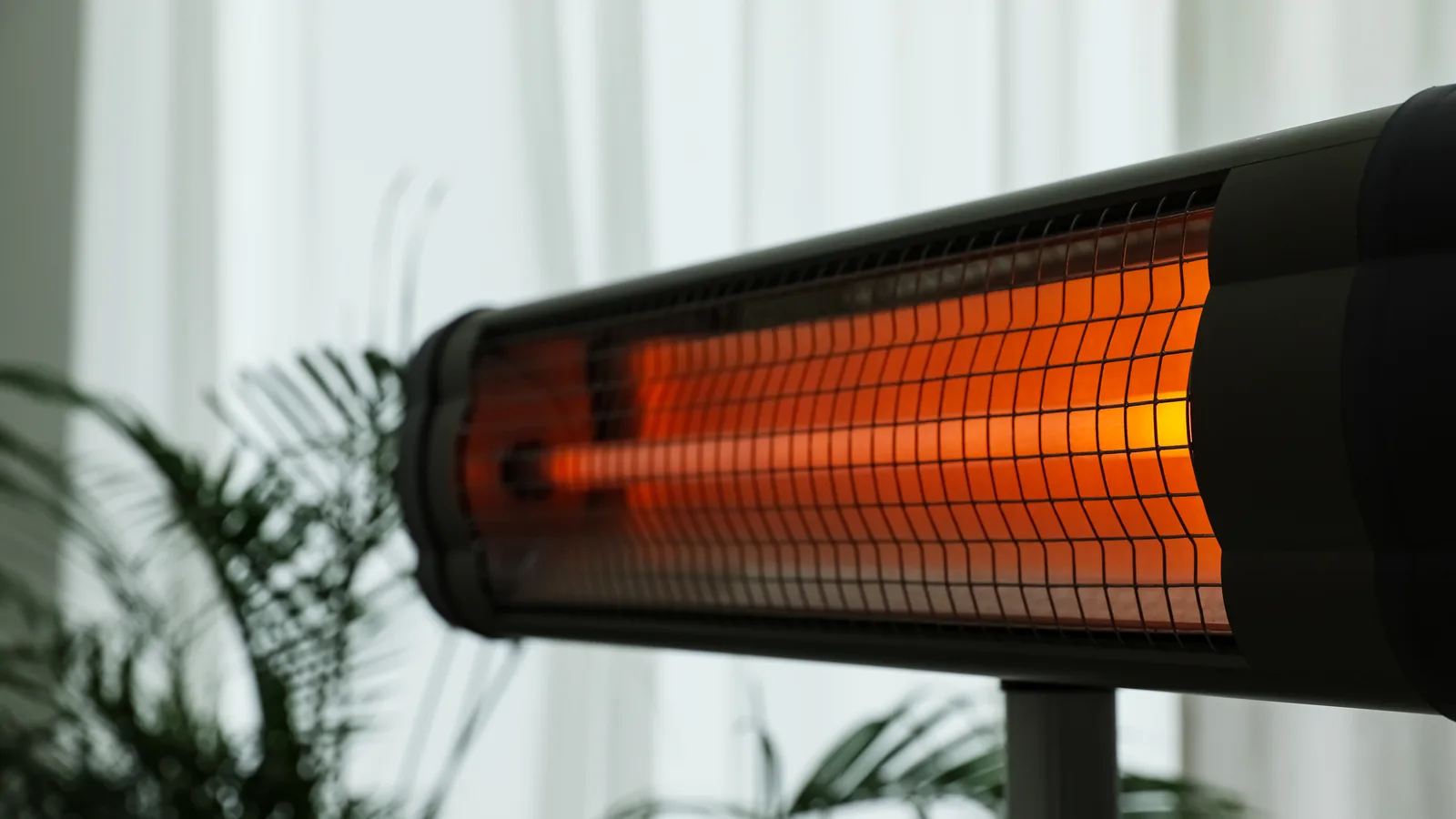
A space heater running on its 1,500-watt high setting uses 1.5 kilowatt-hours of electricity every hour. At the average U.S. residential price in the Energy Information Administration's latest monthly table, 18.16 cents per kilowatt-hour for August 2026, that is about 27 cents an hour. The same hour costs about 19 cents in Nevada and about 48 cents in Maine, and the gap grows quickly over a winter of evenings.
The price this math uses
The EIA, the statistical arm of the Department of Energy, publishes average retail electricity prices by state in Table 5.6.A of its Electric Power Monthly. The latest edition covers August 2026, and the 2026 figures are preliminary estimates. The U.S. average residential price that month was 18.16 cents per kilowatt-hour, up from 17.57 cents in August 2025, a rise of about 3 percent year over year.
State prices in the same table range widely. Among the 48 contiguous states, Nevada had the lowest residential price at 12.72 cents, with Louisiana close behind at 12.87 cents. Maine had the highest at 32.11 cents, followed by California at 29.75 cents. Hawaii, at 47.18 cents, and Alaska, at 29.41 cents, sit outside that range. Prices also move with the season and with each utility's rate design, so a monthly average from late summer is a starting point, not a quote for December.
Per hour, per evening, per month
The arithmetic is the heater's draw in kilowatts times the hours it runs times the price. For a 1,500-watt heater at full output, and an evening defined here as five hours, for 30 evenings a month:
At the U.S. average of 18.16 cents: about 27 cents an hour, about $1.36 an evening and about $41 a month.
At Nevada's 12.72 cents: about 19 cents an hour, about 95 cents an evening and about $29 a month.
At Maine's 32.11 cents: about 48 cents an hour, about $2.41 an evening and about $72 a month.
At Hawaii's 47.18 cents: about 71 cents an hour, about $3.54 an evening and about $106 a month.
These are ceilings. A heater with a thermostat cycles off once the room reaches its setting, so the real draw over an evening is usually lower than full power for every hour, and many models have a low setting around 750 watts, which halves each figure. A heater that runs all night as well, say 12 hours a day, costs about 2.4 times the evening figures.
Your own rate
A state average blends many utilities and rate plans. To use your own number, find the total charge per kilowatt-hour on your electric bill (supply and delivery together) and multiply it by 1.5 for each hour on high. Households on time-of-use plans pay different prices at different hours, which matters most for heaters that run in the early evening.
When spot heating can save, according to DOE
The Department of Energy's Energy Saver guidance on small space heaters says they can cost less to use when the goal is to heat a single room, or to make up for weak heat in one room, and that they can warm a room for someone who feels the cold without raising the temperature of the whole house. It points to radiant models, which heat people and objects in their line of sight, as the more efficient choice when someone will be in a room for only a few hours and can stay in view of the heater. It recommends a thermostatically controlled heater, to avoid wasting energy by overheating a room, and one sized for the room rather than oversized, using the sizing table most heaters include.
When it does not
The same DOE guidance notes that electric space heaters can cost more to run than combustion heaters. The bigger factor is what the main system does at the same time. A space heater only offsets its own cost if the furnace, boiler or heat pump runs less because of it, which in practice means the central thermostat is set lower while the heater warms the one room in use. A heater running in a den while the rest of the house is held at the same temperature adds its full cost, the $41 a month in the average example above, on top of the existing heating bill. Running several heaters in several rooms moves toward heating the house with electric resistance heat, which is the comparison to check against your own fuel and rates.
Safety basics
DOE advises buying a heater that carries a UL certification label and a tip-over switch, and plugging it directly into a wall outlet; if an extension cord cannot be avoided, it calls for the shortest heavy-duty cord of 14-gauge wire or larger, following the manufacturer's instructions. The U.S. Fire Administration says to keep anything that can burn at least 3 feet from space heaters and other heat sources.
Before relying on a heater this winter, read its wattage on the label, find the per-kilowatt-hour total on your last electric bill, and multiply the two by the hours you expect to run it; that figure, against how far you can lower the central thermostat, is the comparison that decides whether it saves money in your home.
Electrical, gas, roof and ladder work can cause serious injury. Shut off power or gas first, follow the manufacturer's instructions and local code, and hire a licensed pro for anything beyond your experience.
This article reports rules, data and expert guidance. It is not legal, tax, insurance or financial advice. Talk to a licensed pro, your tax advisor or your insurer before you act on it.
Loading comments…