












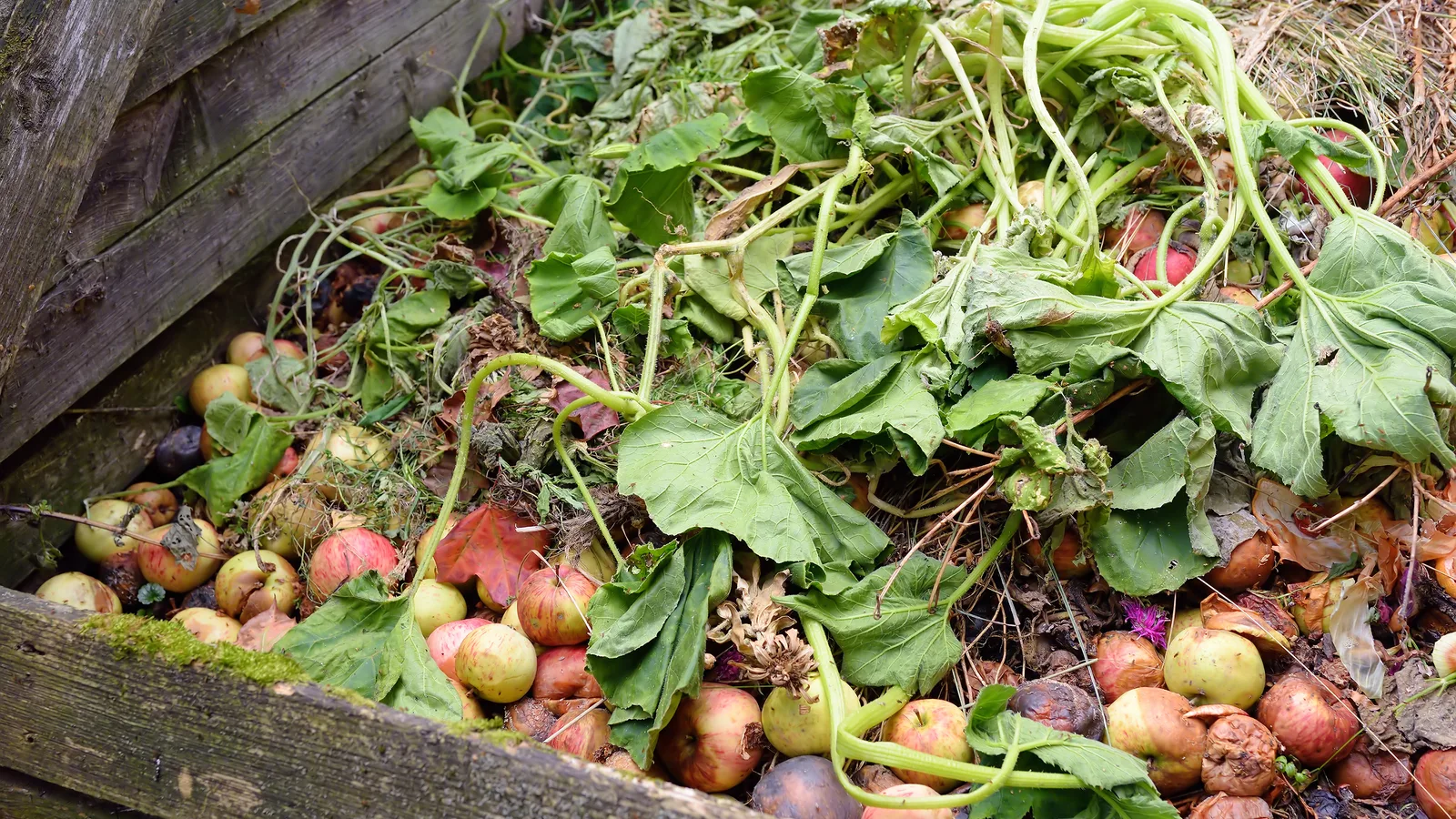
A holiday meal leaves two kinds of waste behind. The prep work produces a pile of potato peels, onion skins, squash rinds, celery ends, coffee grounds and eggshells. The table produces bones, skin, gravy, butter and leftovers. The U.S. Environmental Protection Agency's guide to composting at home treats the two very differently, and the difference comes down to what a backyard pile can actually break down.
What goes in
EPA sorts compost material into greens, which are rich in nitrogen, and browns, which are rich in carbon. The greens on its list include fruit and vegetable scraps, coffee grounds and paper filters, crushed eggshells, paper tea bags without staples and grass clippings. That covers most of what comes off a cutting board before a big meal.
The browns include dry leaves, plant stalks and twigs, shredded brown paper bags and plain paper that is not glossy or colored, shredded cardboard without wax, tape or glue, and untreated wood chips.
What stays out, and why
EPA's list of things to keep out of a backyard pile includes meat, fish and bones, cheese and dairy, and fats, oils and grease. The reasons it gives are practical. These foods draw animals, and a backyard pile generally does not get hot enough to break them down completely. Cooked food falls under the same caution, though EPA says small amounts are fine.
That puts the turkey carcass, the pan drippings, the butter dish and the cheese board outside the bin. EPA also lists compostable plates, cutlery and bags among the items a home pile usually cannot handle, because they need the higher heat of a commercial facility. Some commercial composting programs accept them, so the agency says to check with yours first. Produce stickers do not break down at all and turn up in the finished compost.
The ratio that keeps it from smelling
EPA recommends two to three times as much brown material as green by volume, and it says to cover food scraps with 4 to 8 inches of dry leaves or other browns. A holiday bucket of peels therefore calls for a much larger pile of leaves on top. The pile should be about as damp as a wrung-out sponge.
Chopping or breaking up tough scraps such as corn cobs and broccoli stalks speeds them along. Turning the pile now and then with a garden fork keeps air in it, and a well-tended pile can reach 130 to 160 degrees Fahrenheit, which EPA says helps reduce pathogens and weed seeds.
When a pile goes wrong
EPA's troubleshooting is short. A dry pile needs water and a turn. A pile that smells bad needs more browns and a turn. A pile that will not heat up needs more greens mixed in. To keep rodents out, the agency suggests a bin with a lid, and possibly a floor, with no gap wider than a quarter inch, plus burying food scraps and keeping meat, dairy and greasy food out entirely.
Starting from scratch
For a household starting a pile this weekend, EPA's sequence is to keep scraps in a closed container in the kitchen, stockpile browns outside, pick a well-drained spot near a water source and away from fences, and start with 4 to 6 inches of bulky browns such as twigs or wood chips for airflow. Greens and browns then go on in layers. A well-kept pile is ready in about three to five months, after it stops heating, no food is visible and it has cured for at least four weeks; an untended one can take a year.
For households without a yard, EPA describes worm composting in a bin indoors, kept between 59 and 77 degrees, with red wigglers. Its list of what to leave out of a worm bin is longer: citrus, onions and garlic join meat, dairy and greasy food.
Loading comments…