












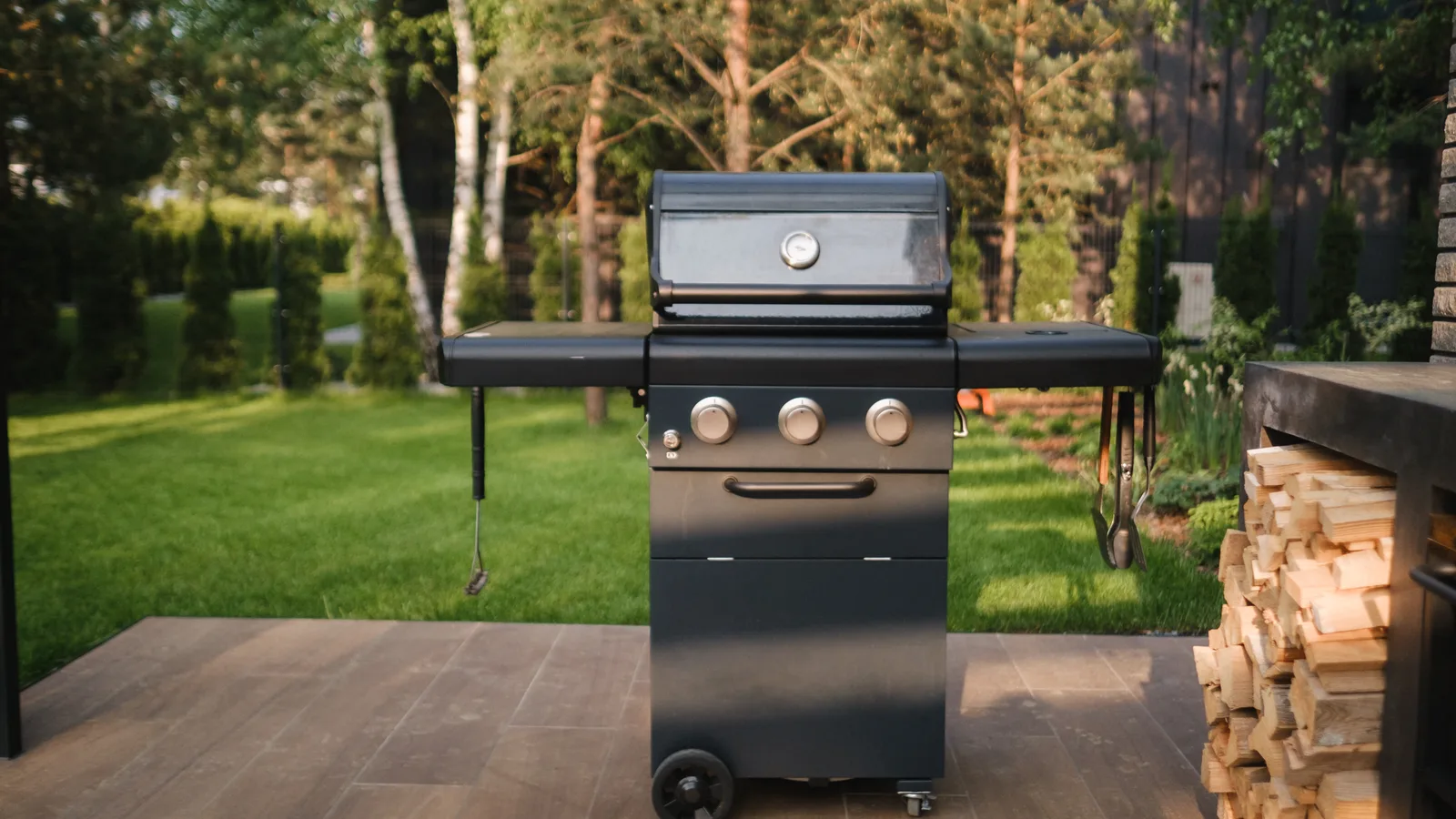
Cold weather pushes a grill toward the house. The spot under the eave is dry, the covered porch is out of the wind, and the corner of the deck by the back door is a short walk with a platter. The National Fire Protection Association's (NFPA) figures on grill fires describe what that move costs: based on annual averages for 2020 through 2024, nearly one quarter of the grill fires that became structure fires started on an exterior balcony or an open porch.
The placement rule NFPA draws from the data is short. The grill goes well away from the home and from deck railings, and out from under eaves and overhanging branches.
What the numbers count
NFPA's grilling page reports national estimates of fires that fire departments responded to, averaged over the five years from 2020 through 2024.
- Gas grills were involved in an average of 9,235 home fires a year. Of those, 4,662 were structure fires and 4,573 were outdoor fires.
- Nearly one quarter of grill structure fires began on an exterior balcony or open porch. Another 8 percent began when an outside wall caught fire, and 3 percent began with a structural member or framing.
- In roughly one fifth of the fires, the grill had not been cleaned.
- Leaks or breaks caused 6 percent of gas grill structure fires and 13 percent of outdoor gas grill fires.
Injuries are counted separately. Citing Consumer Product Safety Commission data, NFPA says an average of 21,682 people a year went to emergency rooms with injuries involving grills over the same period.
Grill fires peak in summer: July and June each account for 15 percent of them, May for 13 percent and August for 11 percent. That leaves a little under half spread across the other eight months, which include the weeks when a turkey goes on a grill or a smoker.
Three things the placement rule keeps away from the fire
The wall. The share of structure fires that began with an outside wall, 8 percent, is the case for distance from the house itself. NFPA gives no single figure in feet on its page. It says to place the grill well away from the home and to follow the manufacturer's instructions, which is where the clearance for a specific model is printed.
The railing. Deck railings are named in the rule because a grill pushed to the edge of a deck to save floor space sits against them.
What is overhead. Eaves and overhanging branches are both on the list. A covered porch has a ceiling where an open deck has sky, and the porch and balcony figure above is the measure of how often that matters.
The zone around it
NFPA sets a distance for people and loose items even where it sets none for walls: children and pets stay at least 3 feet from the grilling area, and so does anything that can burn, such as food wrappers, an oven mitt or a towel. A grill is never left unattended while it is in use. On a deck, the same guidance calls for keeping the grill clear of foot traffic and play areas.
Before lighting a gas grill that has been sitting
For propane grills, NFPA says to check for leaks before use. Its test uses a soapy mixture, and it suggests children's bubble solution. With the cylinder turned on, the solution is sprayed or brushed along the hose, the regulator and the burner connections. Bubbles forming under the gas pressure mean there is a leak, and the instruction is to turn the cylinder off immediately.
Two more steps come from the same page. The lid of a gas grill is always open before it is lit. And grease and fat are removed from the grates and from the trays below them, the buildup behind the one-in-five figure for grills that had not been cleaned.
Charcoal on a wood deck
For charcoal, the hazard continues after the cooking stops. NFPA says to let coals cool completely, then empty them into a metal container with a tight-fitting lid that is used only for coals, and to put that container outside and away from anything that can burn. Coals are never emptied directly into a trash can. Only charcoal starter fluid is used to start the fire, and no fluid of any kind is added once the coals or kindling are lit.
Where that leaves a small deck
On a deck too small to put real distance between a grill and the house, railings and roofline, the NFPA rule points off the deck, to a patio or a level spot in the yard. Renters and condominium owners have one more thing to check: a building's rules or a local fire code may restrict grills on balconies, and the lease, the association's rules or the local fire department is where that answer is.
The step for this week is to open the grill's manual, or look it up by model number on the manufacturer's site, and read the clearance it specifies before deciding where the grill spends the winter.
Electrical, gas, roof and ladder work can cause serious injury. Shut off power or gas first, follow the manufacturer's instructions and local code, and hire a licensed pro for anything beyond your experience.
Loading comments…