












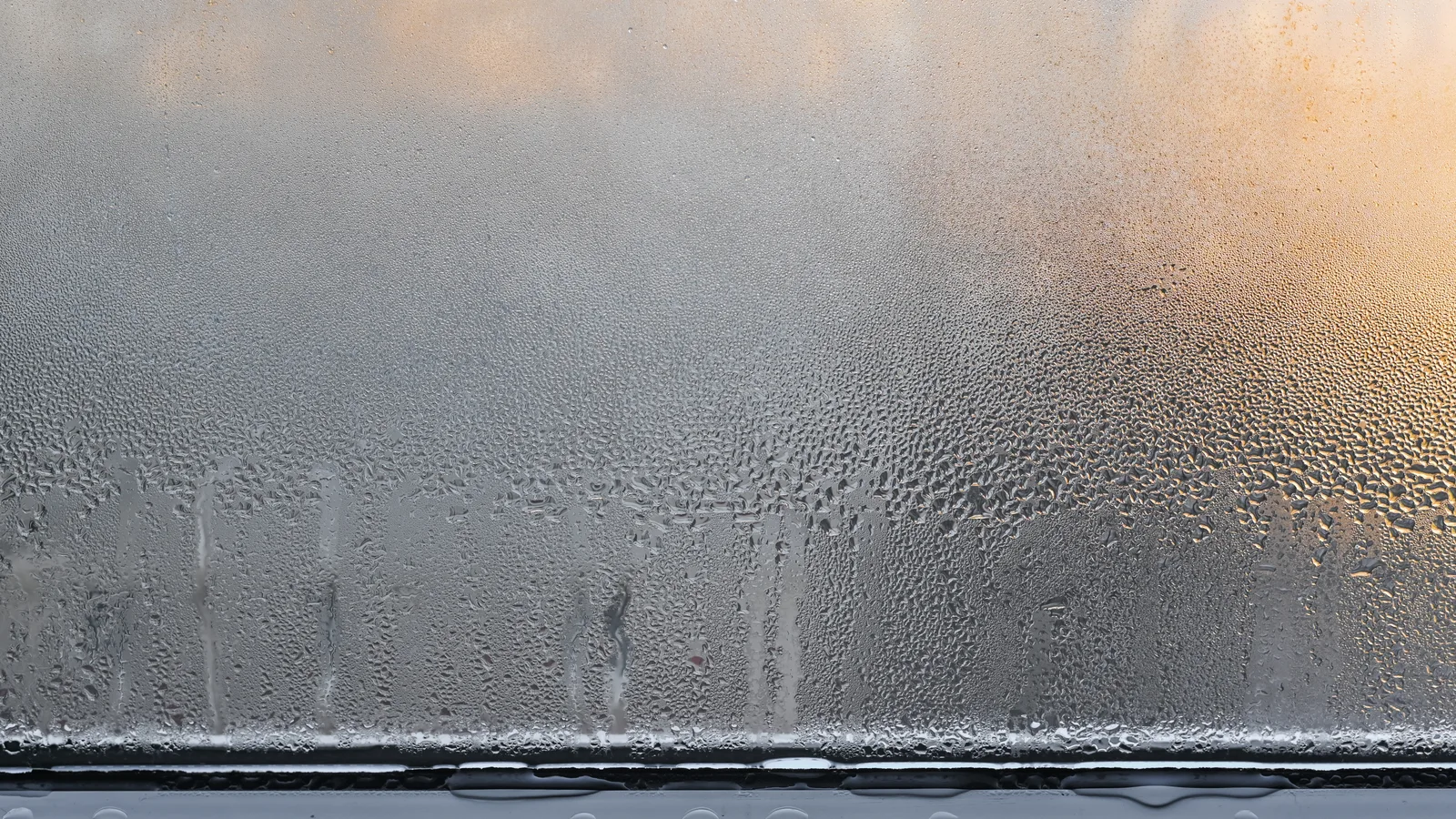
On the first truly cold mornings, a lot of houses wake up with water running down the inside of the windows. It is not a leak. It is the air inside the house meeting the coldest surface in the room. The Environmental Protection Agency treats that water as a signal worth reading, because the same moisture that beads on glass can feed mold on a cold wall, a window sill or the back of a closet.
Why it forms
The EPA's explanation is simple physics: when warm, humid air touches a cold surface, condensation may form. In winter, window glass is usually the coldest thing in a room, so it shows the problem first. Cooking, showers, a houseful of people, drying laundry indoors, unvented gas appliances and a humidifier turned up too high all add moisture to the air. Tighter, better-sealed houses keep more of it in.
The humidity range EPA gives
The EPA advises keeping indoor relative humidity below 60 percent, and ideally between 30 and 50 percent when possible. The useful check is the house as a whole: what a hygrometer reads, and whether water is collecting anywhere besides the glass.
A hygrometer is how a homeowner finds out. The EPA notes that combined temperature and humidity meters are generally available for less than $50 at hardware stores. Readings taken in the main living area, a bedroom and the bathroom after a shower show where the moisture is coming from.
How to bring it down
- Vent the sources. Run the bathroom fan during and after showers and the range hood while cooking, and make sure both vent outdoors rather than into an attic. The clothes dryer should vent outside as well.
- Turn down the humidifier. A whole-house or room humidifier set higher than the house can hold in cold weather will fog the windows every morning.
- Warm the glass. The EPA's approach to condensation is to raise the surface temperature or lower the moisture in the air. Opening blinds and curtains lets room air reach the glass; storm windows and weatherstripping keep the inner pane warmer.
- Move the air. Furniture pushed against an exterior wall traps cold, damp air behind it, which is where mold often appears first.
When it is more than condensation
Water that pools on sills, peeling paint around the frame, dark spots on the drywall below a window, or fog trapped between the panes of a double-pane window are different problems. The EPA's mold guidance says wet materials should be dried within 24 to 48 hours to keep mold from growing, and its homeowner guide says areas of mold larger than about 10 square feet call for its more detailed cleanup guidance or a professional. A window installer can say whether a fogged insulated unit can be replaced by itself, and an HVAC contractor can check whether a humidifier or a missing exhaust vent is the cause.
Loading comments…