












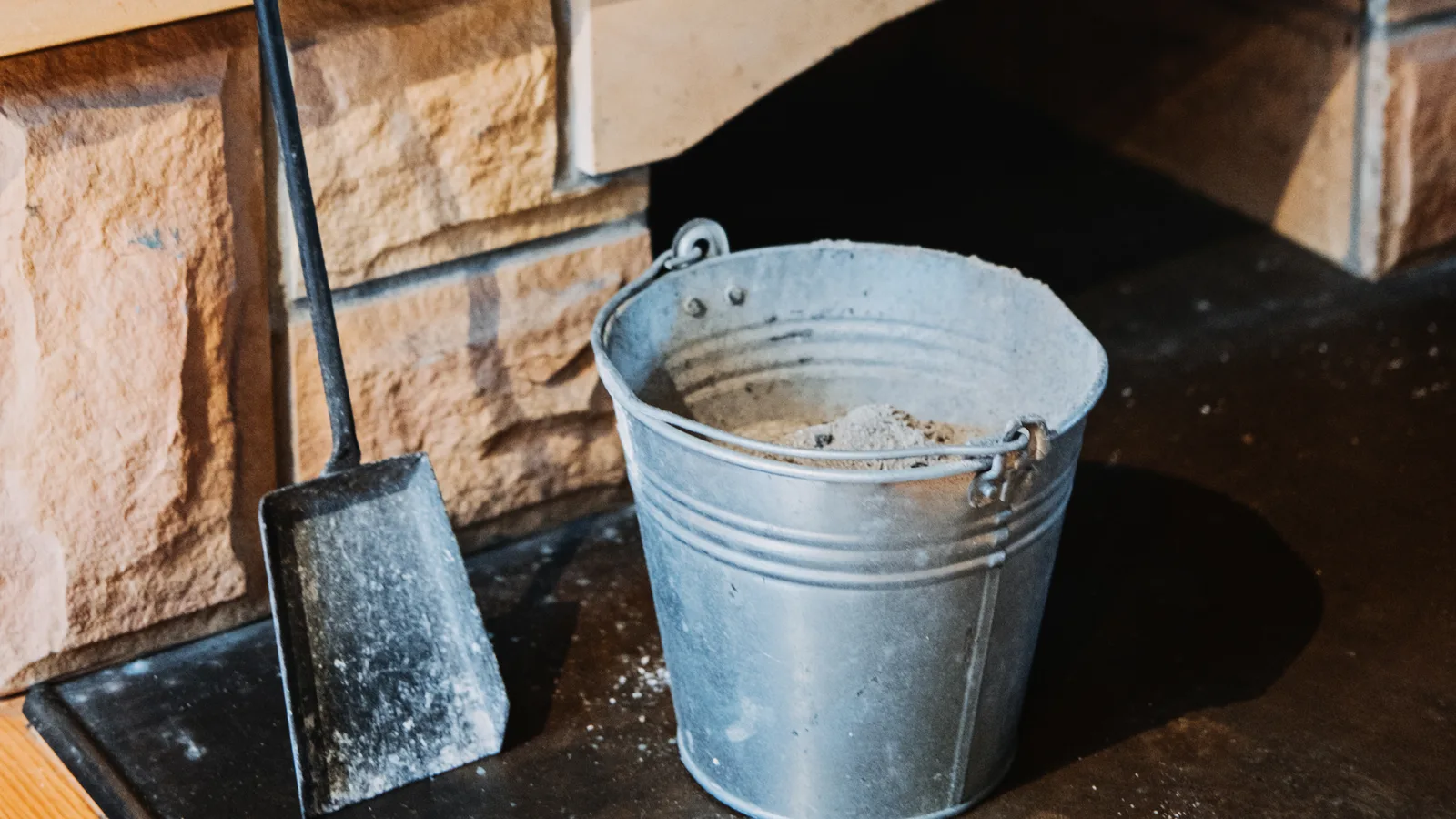
Wood ash from a fireplace or wood stove raises soil pH the way garden lime does, so the question for the gardener is not whether ash helps but whether the soil needs its pH raised at all. Cooperative extension services at the University of Wisconsin, Iowa State, Oregon State and the University of New Hampshire all start in the same place: test the soil before any ash goes down.
Why ash behaves like lime
Ash carries carbonates that neutralize acidity. Wisconsin Extension puts its neutralizing strength at roughly half that of agricultural lime, so about four cups of ash stands in for one pound of aglime. Iowa State gives a calcium carbonate equivalent of 25 to 59 percent for ash, against 90 to 95 percent for lime, and notes that ash acts faster. Ash also supplies calcium (up to about 20 percent, by both Wisconsin and Iowa State figures) and potassium, with smaller amounts of magnesium and phosphorus. It contains essentially no nitrogen.
That makes ash useful on acidic soil and harmful on soil that is already neutral or alkaline. Iowa State and Oregon State both say not to apply it when a soil test shows a pH above 7.0. Soils differ widely by region (Iowa State points out that many Iowa soils already run high in pH), so the local extension office or state soil lab is the place to get a test and a recommendation.
Plants that should not get it
Acid-loving plants suffer when pH climbs. Blueberries, azaleas and rhododendrons appear on the avoid lists from Wisconsin, Iowa State, Oregon State and UNH. Wisconsin adds birches, red maples and pin oaks and warns of chlorosis, the yellowing of leaves when a plant cannot take up iron. Oregon State adds ferns.
Potatoes are the vegetable to watch. Wisconsin and Iowa State both tie higher pH to potato scab, the rough, corky patches on the skin, and UNH says scab-prone potato varieties should not receive ash unless a soil test calls for it. Iowa State and Oregon State also say to keep ash away from germinating seeds and young seedlings, because its salts can damage them.
How much the extension services allow
The limits are annual and modest:
- Wisconsin Extension: about 15 to 20 pounds per 1,000 square feet per year, roughly one five-gallon pail, guided by a soil test.
- Iowa State: no more than 20 pounds, about one five-gallon bucket, per 1,000 square feet per year.
- UNH Extension: about 20 pounds as an upper limit for a 1,000-square-foot garden at pH 6.5, and 10 to 15 pounds for the same area of lawn.
- Oregon State: a ceiling of 10 pounds per 100 square feet per year, with a written record of the date, place and amount.
Oregon State's ceiling is the highest of the four, and it sits beside the same instruction the others give: let the soil test set the actual amount.
Which ash to leave out
Only ash from plain wood belongs in a garden. Oregon State lists ash from trash, cardboard, coal and barbecue charcoal as unsuitable, along with ash from pressure-treated, painted or stained wood. Iowa State and UNH flag treated and painted wood and garbage for the heavy metals and other toxic compounds they can leave behind. Wisconsin advises using ash only from wood of known, natural origin.
Storing it safely until it is spread
The U.S. Fire Administration says to let ashes cool, pour water on them, and keep them in a metal container with a tight-fitting lid at least 10 feet from the house and other buildings. It also says never to empty ashes straight into a trash can. A covered container helps in the garden too: Iowa State says moisture makes ash cake, and Iowa State and Oregon State both warn against leaving ash in piles on the ground, where concentrated salts can leach into the soil.
When and how to apply
Timing advice differs by region. Wisconsin and Iowa State allow spreading in winter or early spring. Oregon State, where winter rains are heavy, says to wait, because nutrients can wash away before plants use them, and suggests applying about two weeks before planting. All of them call for a calm day, moist soil, and an even layer worked or raked lightly into the top few inches. Iowa State warns never to mix ash with nitrogen fertilizer, which can release ammonia gas. Ash is caustic, so the extension services list gloves, eye protection and a dust mask.
The practical first step this winter is a soil test. A pH reading below the range the garden's plants prefer is the case where a bucket of cold, sifted ash has a place; a reading near or above 7.0 means the ash belongs elsewhere.
Sources
- University of Wisconsin-Madison Extension: Using Wood Ash in the Home Garden
- Iowa State University Extension and Outreach: Using Wood Ashes in the Home Garden
- Oregon State University Extension Service: Use fireplace ash sparingly to boost garden soil
- UNH Extension: Guide to Using Wood Ash as an Agricultural Soil Amendment
- U.S. Fire Administration: Discard Ashes Safely
Loading comments…